
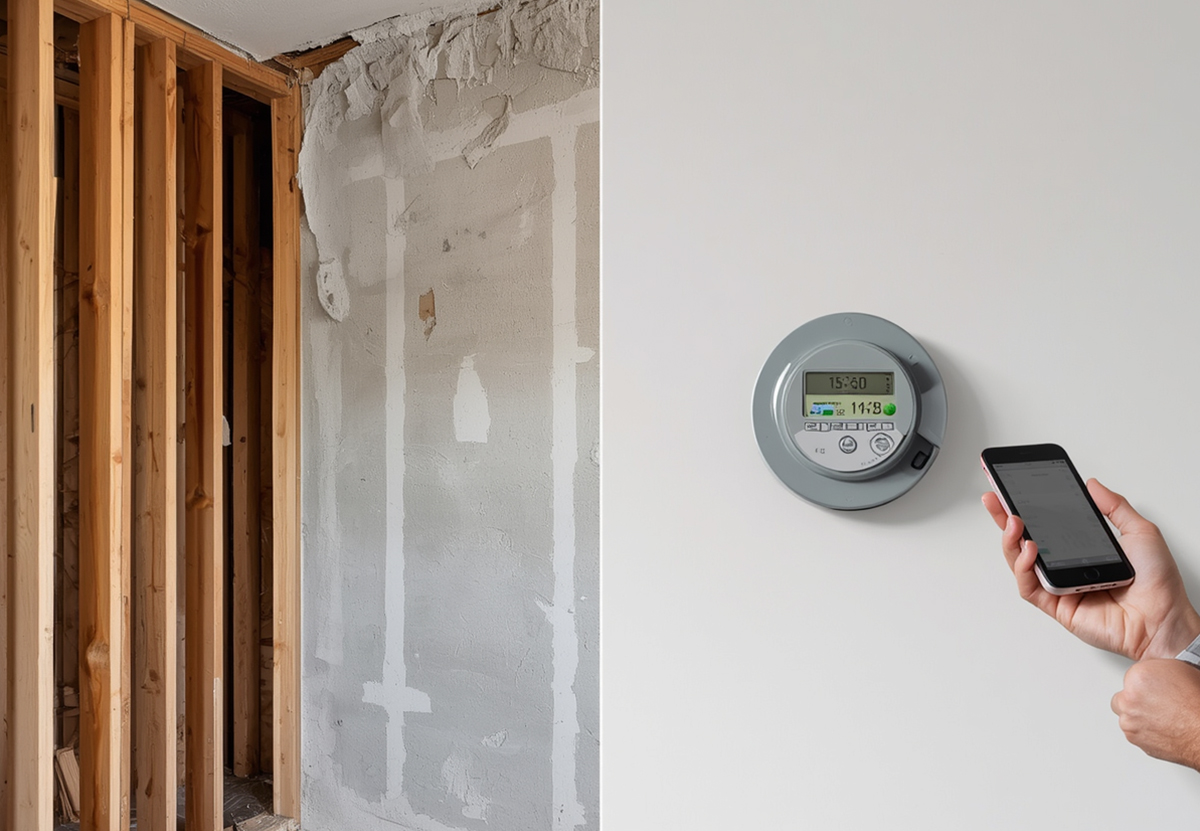
Have you ever walked into the utility room of a vintage multi-family property, looked at the chaotic web of pipes, and felt an immediate sense of dread? If you manage or own older properties, you already know the financial headache of master-metered utilities. You are stuck paying a massive, unpredictable water or gas bill every month, completely at the mercy of tenant usage habits.
It makes you wonder: Is there a way to shift these skyrocketing utility costs directly to actual tenant consumption without executing a massive, budget-crushing renovation?
Traditionally, the answer was a resounding no. Upgrading the infrastructure of legacy properties usually meant tearing down historic plaster, displacing tenants, and completely rebuilding internal plumbing networks from scratch. It was a logistical nightmare that left owners asking if the return on investment was even worth the chaos.
But here is the good news: you do not have to gut your building to take control of your overhead. Thanks to recent advances in technology, implementing a modern retrofit is no longer the invasive surgical procedure it used to be. It is entirely possible to introduce individual water submetering systems into complex, single-loop older buildings without tearing down your walls or forcing major infrastructure changes.
In this comprehensive guide, we are going to pull back the drywall digitally. We will look at exactly how single-loop plumbing systems work, explore the architectural constraints of older buildings, and show you the precise engineering strategies needed to modernize your property seamlessly, efficiently, and cleanly.
Anatomy of a Single-Loop System: Why Retrofits Are Complex
When you step inside a property built fifty or sixty years ago, you are looking at a completely different philosophy of construction. Back then, energy was cheap, water was abundant, and nobody was thinking about digital tracking. To successfully upgrade these assets, we first have to understand the invisible layout behind the plaster.
How exactly do these legacy layouts work, and why do they pose such a unique puzzle for modern utility tracking?
The Legacy Blueprint
In a traditional master-metered setup, the entire building acts like a single, massive apartment. Instead of each unit having its own dedicated supply line branching off from a central point, older buildings utilize a single-loop configuration.
Picture a massive loop of pipe traveling vertically or horizontally through the entire property:
- The Shared Highway: A single main water or gas line snakes through the building, hitting Unit 1, traveling through the wall to Unit 2, looping up to Unit 3, and so on.
- The Multi-Point Problem: Because of this interconnected design, a single apartment’s bathroom might get its cold water from one vertical pipe riser, while its kitchen sinks hook into an entirely different pipe loop across the unit.
- The Tracking Nightmare: If a tenant’s utility usage is scattered across three different internal loops, how do you measure their total consumption with just one traditional meter?
The “All-or-Nothing” Shutoff Risk
Have you ever tried to perform a simple pipe repair in an older building, only to realize you have to shut off utility access for the entire complex? This is the reality of working with legacy plumbing systems.
Most older configurations lack localized isolation valves. If an engineering team attempts to cut into a pipe to install individual submeters without careful strategic planning, it triggers an “all-or-nothing” scenario. You are forced to drain the entire building’s system, disrupting dozens of residents and risking compounding system pressure issues when the lines are recharged.
Mapping the Hidden Network
The final hurdle is a lack of reliable data. If you have ever inherited a property portfolio, you know that original architectural blueprints for properties built decades ago are either completely missing, highly inaccurate, or unrepresentative of decades of undocumented maintenance work changes.
Before a single piece of hardware can be introduced, engineers must essentially act as digital archaeologists. Using non-invasive technological advances like thermal imaging and ultrasonic pipe locators, modern teams can trace exactly where the water streams flow inside the walls—allowing us to map out a precise retrofit strategy without picking up a sledgehammer.
Key Takeaways
Retrofitting legacy multi-family properties for individual utility tracking requires moving past traditional, destructive construction methods. The process boils down to three key pillars:
- Understanding the Architecture: Older properties rely on a single-loop system where utility lines snake continuously from one unit to the next, rather than branching out individually.
- Embracing Technology over Demolition: Recent technological advances allow engineers to map hidden pipe networks using non-invasive diagnostics and install compact, electronic submeters without tearing down walls.
- Mitigating Operational Risks: Modern retrofits bypass the need for major infrastructure changes or building-wide service shutoffs through localized isolation and strategic pipe re-routing.
Future Outlook
The regulatory landscape for older building stock is shifting rapidly. As municipal water restrictions tighten and energy codes evolve, master-metered properties face escalating financial liabilities and stagnant valuations. Transitioning to individual submetering is no longer just an infrastructure upgrade—it is a critical strategy for long-term financial risk management and utility cost recovery.
Next Steps for Property Owners and Developers:
If you are managing a vintage asset with skyrocketing utility overhead, do not assume a retrofit is too invasive or cost-prohibitive. Partner with an experienced engineering team to digitally map your property’s internal systems. By identifying the exact single-loop configurations behind your walls today, you can design a clean, non-invasive submetering solution that immediately protects your bottom line and boosts your net operating income tomorrow.