
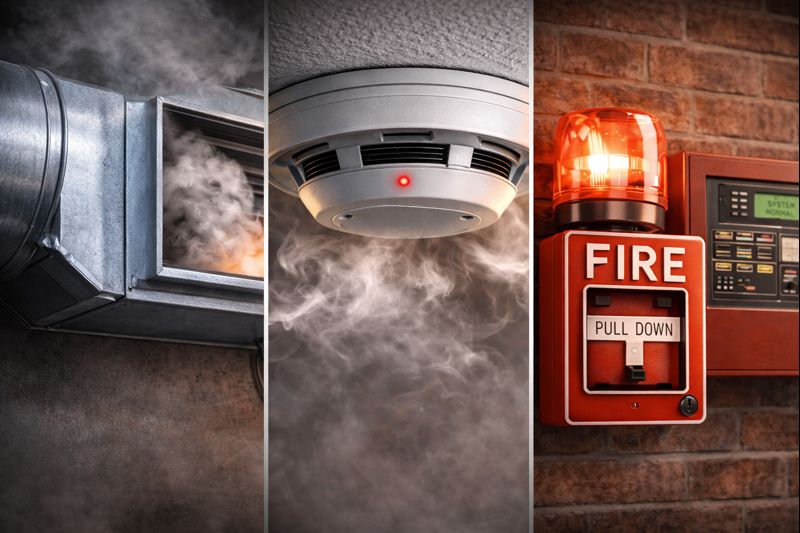
When it comes to fire safety, most people think about sprinklers and exit signs, but what about the systems quietly working behind your walls and above your ceilings? Have you ever stopped to ask how smoke is controlled, how danger is detected early, and how occupants are alerted in time to evacuate safely? This is where the powerful combination of smoke dampers, smoke detectors, and a building fire alarm system comes into play.
Together, these three components form the backbone of modern fire protection strategies. They don’t just respond to emergencies, they actively shape how safely a building performs during a fire event. From limiting smoke spread to triggering rapid emergency response, these systems are designed to protect lives, reduce property damage, and support first responders when every second matters.
Yet despite their critical role, many building owners, developers, and even project teams overlook how these systems actually work together. Are they properly integrated? Are they aligned with today’s building codes? And are they being maintained to perform when it matters most?
In this guide, we’ll break down the fire safety trio in a clear, practical way, helping you understand not only what these systems do, but why they matter, how they support overall safety, and what you should be looking for when designing, upgrading, or managing a building. Whether you’re overseeing a new project or evaluating an existing facility, this knowledge can make the difference between compliance and true protection.
Let’s take a closer look at the systems quietly standing guard, and how they work together to keep buildings safer, smarter, and more resilient.
Understanding the Role of Smoke Dampers in Fire Protection
When a fire breaks out, flames aren’t always the biggest threat, smoke is. It spreads faster, travels farther, and causes most fire-related injuries. So how do modern buildings prevent smoke from turning hallways, stairwells, and escape routes into deadly corridors? The answer lies in one often-overlooked hero of fire safety: smoke dampers.
What Are Smoke Dampers and Why Do They Matter?
Smoke dampers are mechanical devices installed inside HVAC ductwork and air distribution systems. Their main job is simple but powerful: stop smoke from traveling through ventilation pathways during a fire. When activated, these dampers automatically close, sealing off sections of the building and limiting smoke migration.
Think of them as invisible barriers that protect occupants by preserving breathable air where evacuation is happening. Without smoke dampers in place, HVAC systems can unintentionally become highways for toxic smoke, spreading danger instead of comfort.
How Smoke Dampers Actually Work
Understanding the functionality of smoke dampers helps explain why they’re critical to overall fire protection strategies. When smoke is detected or a fire alarm signal is triggered, dampers respond immediately.
Here’s what typically happens:
- Detection occurs – Smoke sensors or alarm signals identify a fire event.
- Control systems activate – A signal is sent to the damper actuator.
- The damper closes – Airflow is stopped, preventing smoke transfer.
- Protected zones are maintained – Safe exit paths remain clearer for evacuation.
This automated response happens within seconds, a timeframe that can save lives.
Where Smoke Dampers Are Installed in Buildings
You’ll usually find smoke dampers placed at strategic locations where ducts pass through fire-rated walls, floors, or shafts. Common installation points include:
- Corridor and stairwell penetrations
- Mechanical room duct connections
- Vertical shaft transitions
- Fire-rated wall and floor assemblies
Each placement decision is designed to maintain compartmentalization, a key principle in building safety design.
Why Smoke Dampers Are Essential for Life Safety
Smoke dampers don’t just protect infrastructure, they protect people. Their value becomes clear when you consider what they help prevent:
- Reduced smoke inhalation risks for occupants
- Improved visibility along evacuation routes
- Better conditions for firefighter access
- Slower spread of hazardous gases
In high-rise buildings, hospitals, mixed-use developments, and commercial spaces, this layer of protection is not optional, it’s essential.
Compliance and Performance Go Hand in Hand
Smoke dampers are also a major requirement in modern building codes and life safety standards. But meeting code is only the starting point. Proper specification, correct installation, and coordinated system integration determine whether a damper performs as intended during real emergencies.
Ask yourself:
- Are dampers properly located in critical airflow paths?
- Are they integrated with fire alarm signals?
- Are access panels provided for future testing and inspection?
These details directly impact long-term performance and regulatory compliance.
Final Considerations for Smarter, Safer Fire Protection
Smoke dampers quietly operate behind the scenes, yet their role in fire protection is anything but minor. They control smoke movement, protect evacuation routes, and support overall building safety, all while working automatically when occupants need them most.
As we move forward, understanding how smoke dampers connect with detection and alarm systems becomes even more important. Because in a real emergency, no single system works alone, and coordination is what makes fire safety truly effective.
Smoke dampers play a critical role in modern fire protection by controlling smoke movement, protecting evacuation paths, and supporting occupant safety during emergencies. Their automated functionality helps prevent smoke from spreading through HVAC systems, reducing health risks and improving overall building performance. When properly designed, installed, and integrated with other life safety systems, smoke dampers become a powerful layer of defense that goes far beyond basic code compliance.
Looking ahead, smarter building technologies and tighter safety regulations will continue to raise expectations for fire protection performance. Now is the time for building owners, developers, and project teams to review their smoke control strategies, evaluate system coordination, and invest in proactive planning. Whether you’re designing a new project or upgrading an existing facility, partnering with experienced professionals can help ensure your building is not just compliant, but truly prepared for the moments that matter most.
Ready to strengthen your building’s fire safety strategy? Connect with our experts today and ensure your smoke control and alarm systems are designed to protect when it matters most.
