
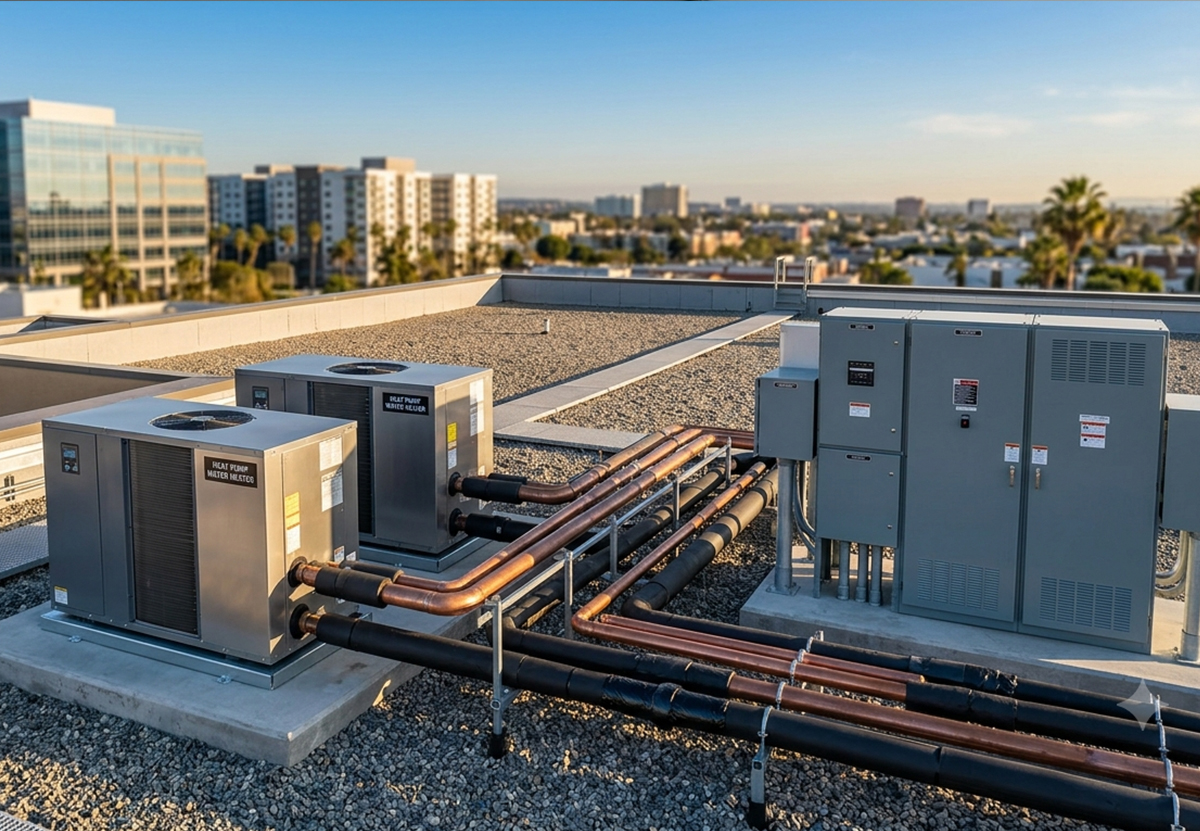
If you own, develop, or manage commercial or multi-family properties in Southern California, big mechanical changes are on the horizon.
Under SCAQMD Rule 1146.2, the South Coast Air Quality Management District is phasing out natural gas-fired water heaters, boilers, and process heaters rated at $2,000,000 or less.
While the shift to zero-emission equipment is underway, navigating compliance doesn’t have to mean hitting a financial or operational wall. Based on guidance from mechanical engineering experts, here is what you need to know about compliance timelines, outright exemptions, extensions, and smart design strategies.
1. The Timeline: When Does it Hit?
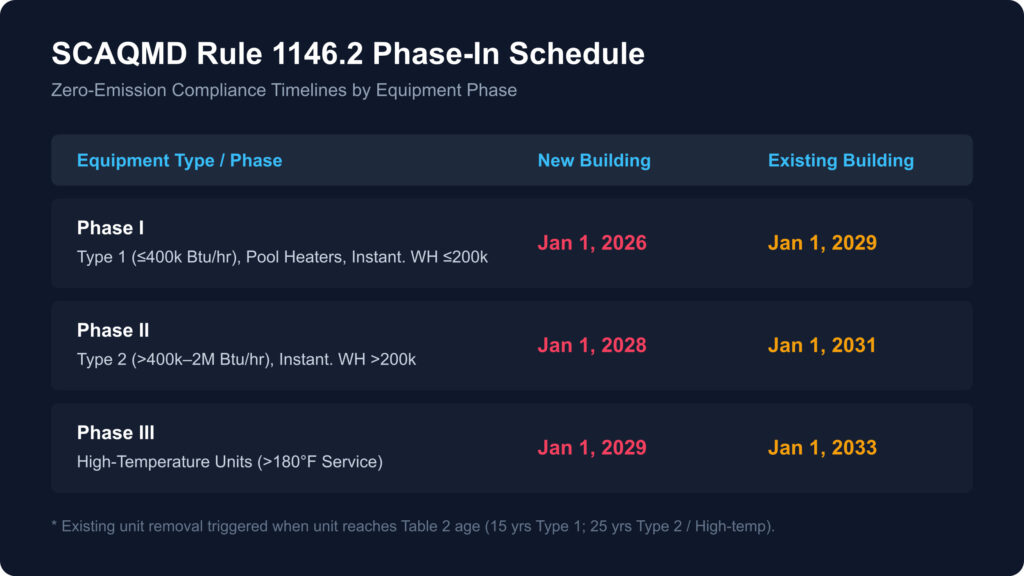
The zero-emission mandate kicks off with new construction and rolls out to existing buildings over time.
It’s crucial to note that existing equipment isn’t banned overnight when these dates hit. You are only prohibited from operating gas equipment once it reaches its official end-of-life “Table 2 Age”, 15 years for smaller units and pool heaters, or 25 years for larger instantaneous and high-temp units.
Important Note on Equipment Age: Units without documented age were officially deemed “end-of-life” as of January 1, 2025. If you haven’t already, take photos of your equipment rating plates and archive past invoices today to prove your equipment’s actual age and extend your operational runway.
Here is how the phase-in schedule breaks down:
2. Outright Exemptions: Finding Relief in Subdivision (k)
Not every piece of equipment is forced into immediate electrification. You may be completely exempt from zero-emission upgrades if you qualify under one of these provisions:
- Decentralized Residential In-Unit DHW: Individual water heaters under $75,000 fall under Rule 1121, not 1146.2. Designing multi-family projects with decentralized, in-unit gas water heaters allows you to bypass the central electrification mandate.
- Low-Use Units: If a unit installed before June 7, 2024, burns less than 2,000–3,000 terms annually (depending on capacity), it can remain gas-fired. You must verify usage via fuel meters or gas bills and keep records for 3 years.
- Small Business Relief: Qualifying small businesses can get relief from the burnout requirement by registering on the SCAQMD Compliance Portal at least 90 days before the equipment reaches its end-of-life age.
3. Extensions: What to Do When the Grid or Space Isn’t Ready
Electrification often requires major power drops and larger equipment footprints. Fortunately, SCAQMD included crucial “relief valves” in Subdivision (i):
The Utility Upgrade Extension
With Southern California Edison (SCE) and LADWP facing long lead times for grid upgrades, you can apply for an extension of up to 5 years total (24 + 24 + 12 months) if the utility cannot deliver the required power in time. You must provide portal notice 90 days before compliance (or 30 days post-failure) and submit signed utility documentation. A temporary gas unit can operate in the interim.
Construction & Space Extensions
Heat pump water heaters take up significantly more physical footprint and clearance than the gas boilers they replace. If you have to expand mechanical space or relocate equipment, you can request an extension of up to 18 months.
Portfolio & Emergency Options
- Multiple Units Plan: If you own 5+ units coming due within two calendar years, you can apply to stagger replacements over two additional years.
- Emergency Replacements: If a unit suffers a sudden breakdown post-deadline, non-residential properties can install a temporary gas unit for up to 6 months while electrical upgrades are finished.
- Key Design Strategies for Property Owners
To manage budgets and project schedules effectively, keep these engineering strategies in mind:
- Know Your Renovation Definition: “New Building” mandates only apply to ground-up construction or major alterations that change the occupancy classification. Deep gut renovations and repositioning that keep the same occupancy remain classified as “Existing Buildings”, buying you three extra years of compliance.
- Consider Burner Retrofits: If you have an aging boiler, performing a burner retrofit before your compliance deadline or end-of-life age resets the clock using ultra-low-NOx standards rather than forcing a full electrical conversion.
- Double-Check Your Jurisdiction: Rule 1146.2 applies strictly within the SCAQMD boundary (Orange County, non-desert LA County, western San Bernardino, and western Riverside/Coachella Valley). If your project sits in the high desert, Antelope Valley, or San Diego County, different rules apply.
- Budget Electrical Early: Mechanical equipment replacement is rarely just a plumbing job anymore. Electrical infrastructure, service capacity, switchgear upgrades, and feeder routing, is almost always the schedule-critical path.
The Bottom Line
While SCAQMD Rule 1146.2 sets a firm direction toward electrification, it isn’t meant to shut your facility down. By auditing your existing equipment age now, assessing utility capacities early, and leveraging built-in extension pathways, you can build a cost-effective compliance strategy that keeps your facility running smoothly.