
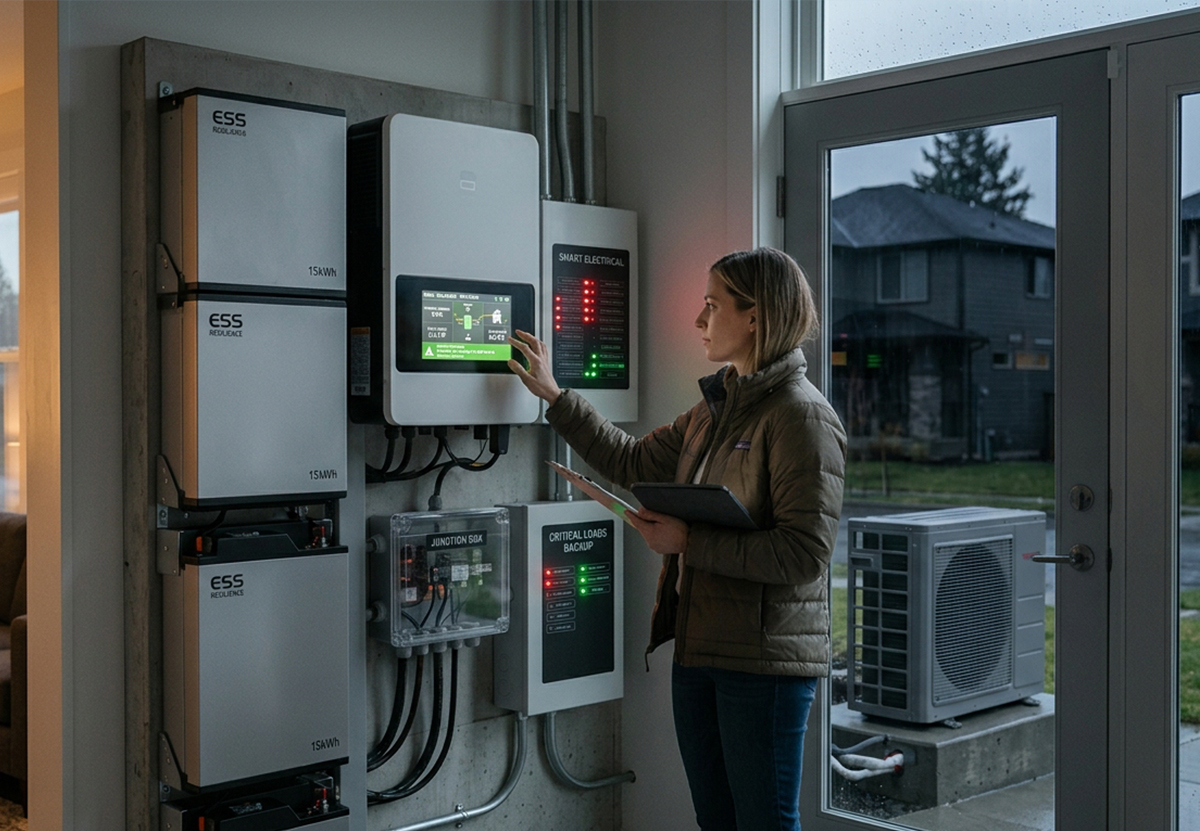
When high winds and severe wildfire risks force utilities to cut the grid, having panels on your roof is only half the battle. If a Public Safety Power Shutoff hits your neighborhood tomorrow, will your home remain a brightly lit sanctuary, or fall into pitch darkness along with the rest of the block?
Transitioning from standard grid-tied power to a self-sustaining microgrid requires more than just installing hardware. It demands a clear playbook for home battery management before, during, and after a utility shutdown. Having an off-grid solar backup for Public Safety Power Shutoffs gives you energy independence, but keeping essential appliances running through an extended multi-day outage comes down to execution.
Knowing how to manage solar battery during PG&E PSPS events, or similar utility shutoffs across high-risk fire zones, is what separates homes that weather the storm from those left in the dark. In this comprehensive guide, we will break down the essential operational best practices you need to optimize your storage reserves, automate smart load shedding, and keep your solar-plus-storage system running smoothly when you need it most.
- Pre-Shutoff Readiness: Optimizing Battery Reserves Before Outages
When utility companies broadcast an impending PSPS event, your preparation window begins immediately. Are your storage reserves configured to handle a sudden grid disconnect, or will your system enter the outage half-empty? Proactive preparation ensures your microgrid starts operating from a position of strength.
Setting 100% Reserve Margins Upon Utility Weather Alerts
In standard daily operation, your system likely cycles energy to maximize self-consumption or offset peak utility rates. However, the moment an official weather warning or shutoff alert is issued, your immediate priority shifts to energy preservation.
- Override Standard Discharge Limits: Log into your energy management platform and temporarily bump your minimum State of Charge (SoC) reserve from daily self-use levels (typically 20%–30%) up to 100%.
- Force Grid Charging: If cloudy conditions are forecasted prior to the shutoff, enable grid-charging protocols so your solar battery reaches maximum capacity before utility power drops.
Auditing Essential Circuit Loads via Mobile Monitoring Apps
Do you know exactly how many watts your household consumes at baseline? Before the grid goes dark, perform a quick digital audit using your smart panel or inverter app.
- Identify Baseload Power Draw: Observe your live real-time wattage while standard appliances are idling.
- Isolate High-Drain Devices: Verify that non-essential, heavy-draw circuits, such as electric vehicle chargers, hot tubs, or secondary air conditioning units are set to turn off automatically.
- Check Medical & Communication Equipment: Confirm that critical devices (refrigeration, well pumps, home routers, and medical gear) are assigned exclusively to your essential loads panel.
Validating Automated Grid Isolation and Switch Functionality
When the utility turns off power, your Microgrid Interconnect Device (MID) or automatic transfer switch must physically disconnect your home from the main electrical grid. This islanding process prevents dangerous backfeeding into utility lines and protects line workers.
Periodically testing this switch during routine maintenance ensures that your system transitions off-grid smoothly and instantly during an actual emergency.
- In-Outage Power Management: Maximizing Continuous Microgrid Production
Once the grid drops and your home enters island mode, maintaining continuous power requires dynamic home battery management. How do you keep power flowing smoothly when the sun goes down or when solar production peaks?
Balancing Direct Solar Generation and Battery Charge Rates
During an extended outage, your solar PV array does two jobs simultaneously: directly powering your active household loads and routing excess energy back into the battery bank.
- Morning Recovery Phase: Early in the day, limit high-draw appliance usage to allow incoming solar generation to replenish energy used overnight.
- Midday Surplus Phase: When your array reaches peak sun hours, run necessary high-wattage tasks (like water pumping or laundry) directly on real-time solar generation rather than draining stored battery power later.
Preventing System Overload via Dynamic Inverter Frequency Shifting
What happens when your battery reaches 100% charge on a bright, sunny afternoon, but your solar panels are still producing full power? Without grid connectivity to export surplus electricity, your hybrid inverter must regulate incoming solar energy to prevent system damage.
Advanced microgrid inverters utilize frequency shifting (typically raising AC frequency from 60.0 Hz up to 60.5 Hz – 62.0 Hz to signal grid-tied microinverters or string inverters to throttle down or curtail production. Ensuring your system’s frequency-watt response controls are properly configured keeps your microgrid stable without tripping circuit breakers during peak solar hours.
Monitoring Depth of Discharge Limits to Extend Storage Lifespan
While modern Lithium Iron Phosphate (LiFePO4) chemistry offers superior resilience and deep cycling capabilities, consistently draining your battery to absolute zero places unnecessary stress on the cells. Establishing strict operational best practices, such as maintaining an operational floor around 10% to 15% SoC during off-grid events, protects cell health and leaves a safety buffer for emergency needs.
Key Takeaways
- Proactive Preparation: Shift battery reserves to 100% capacity and audit essential circuit loads the moment a PSPS or severe weather alert is issued.
- Continuous Energy Balance: Manage daytime consumption around solar peak hours to power active loads directly while keeping storage replenished for overnight needs.
- Intelligent Grid Islanding: Utilize advanced inverter controls, such as frequency shifting and dynamic curtailment,to prevent overcharging and keep off-grid microgrids stable.
- Smart Load Management: Prioritize critical circuits (refrigeration, communication, well pumps) and shed heavy non-essential loads automatically to avoid unexpected system trips.
- Seamless Grid Return: Re-engage heavy household appliances in controlled stages after grid restoration to avoid voltage spikes and reset baseline storage profiles smoothly
The Road Ahead: Take Action Today
As severe weather events and grid instability become more frequent, relying on passive power backup is no longer sufficient. Designing and operating a resilient solar-plus-storage microgrid ensures your home remains safe, comfortable, and fully functional through every utility shutoff.
Ready to future-proof your energy setup?
- Audit Your Loads: Review your home’s critical energy consumption and identify which circuits must stay powered during an extended outage.
- Upgrade Your Storage Controls: Partner with a certified clean energy professional to configure automated reserve margins, frequency-watt response parameters, and smart circuit management.
- Test Your System: Perform an annual simulated grid isolation test to ensure your microgrid transitions seamlessly when the next PSPS event hits.
Take control of your home’s energy independence today, because true resilience starts long before the power goes out.